

The Aeon Herald / HISTORICAL EDITION
United Nations Forces Land at Inchon
An amphibious assault behind North Korean lines opens a new phase of the Korean fighting.
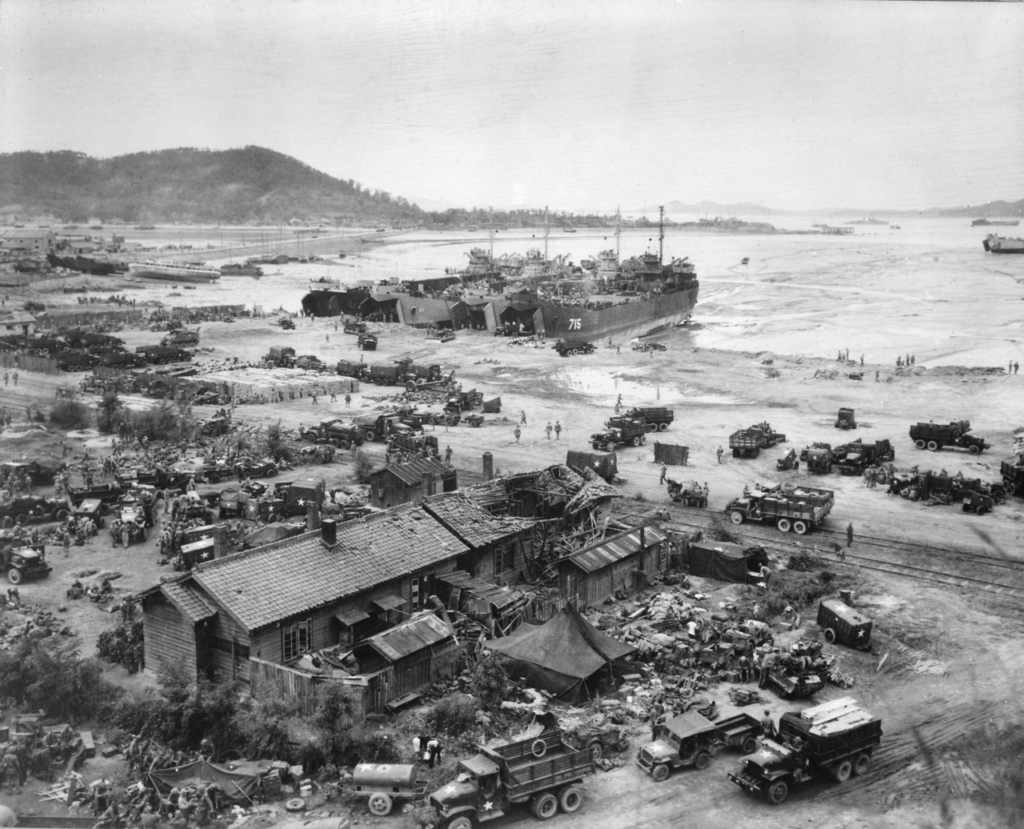
TOKYO, Sept. 16.—United Nations forces have landed at Inchon, the port serving Seoul, in an operation designed to strike behind the North Korean army. American Marines went ashore yesterday under naval and air support, with the difficult tides and approaches placing exacting demands upon the assault.
General Douglas MacArthur's plan seeks to threaten the enemy's communications while Allied troops hold the perimeter around Pusan in the south. The distance between the two positions is the point of the operation: a successful advance from Inchon could force North Korean commanders to meet danger far behind their present front.
The landing does not mean that Seoul has already been recovered. Fighting for the capital and the roads beyond it remains ahead, and the course of that fighting cannot yet be stated with confidence.
Since the invasion of South Korea in June, the war has brought retreat, destruction and displacement on a large scale. Yesterday's assault offers the Allied command an opportunity to alter the military position. Whether it can turn that opportunity into a lasting settlement is another question.
Sources & further reading
- Inchon Assault Landings— National Museum of the U.S. Navy / Naval History and Heritage Command; September 15–16, 1950 events; institutional account undated.
- Inchon Landing (Operation Chromite)— Bryce Hodges / Naval History and Heritage Command; institutional article2025.