

The Aeon Herald / HISTORICAL EDITION
Mariner Sends First Close Views of Mars
A successful fly-by replaces some familiar speculation with measurements and pictures from another planet.
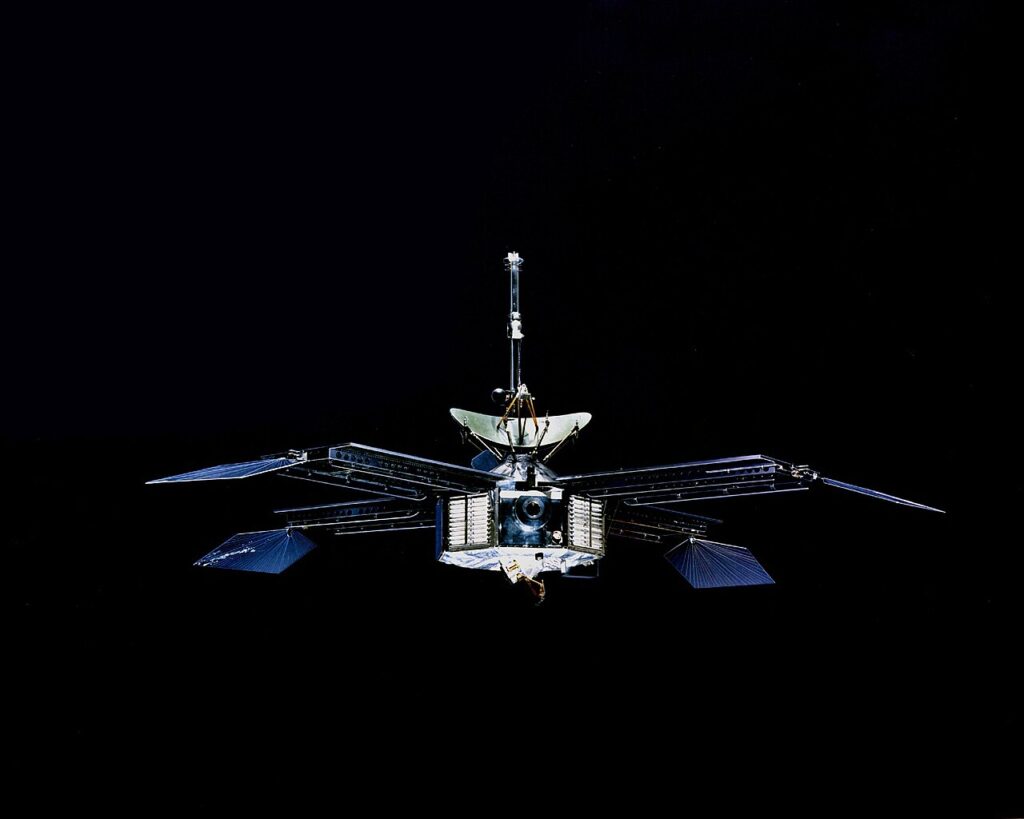
PASADENA, Calif., July 16.—Mariner 4 has passed Mars and begun sending back close-range photographs, giving scientists their first direct photographic examination of another planet from a nearby spacecraft. The encounter took place on July 14–15, with the transmission of the stored pictures requiring time over the long radio link to Earth.
The first picture shows the planet’s edge against the darkness of space. Further frames must be received and examined before the photographic results can be judged. The small area surveyed cannot settle every question about Mars; measurements of its atmosphere and surroundings will be studied alongside the pictures.
The accomplishment has required the spacecraft to reach the proper point after a journey of more than seven months, aim its instruments and communicate across an enormous distance. There was no opportunity for a cameraman to correct a poor exposure on the spot.
Mars has become less a screen for speculation and more a place that instruments can investigate. That is a substantial change, even while the interpretation of the first photographs remains unfinished.

Sources & further reading
- 55 Years Ago: Mariner 4 First to Mars — John Uri / NASA Johnson Space Center, 2019-11-27.
- First Digital Image from Space (Mariner 4-Mars) — NASA / Jet Propulsion Laboratory-Caltech.
- Mariner spacecraft design illustration: file metadata — NASA / Wikimedia Commons, 1964-12-01.
Related Herald reporting
- Viking Lands on Mars and Sends Surface Pictures — Donald Price, 1976-07-21.
- Pathfinder Launches With a Small Rover Bound for Mars — Kevin Wallace, 1996-12-05.
- Perseverance Lands in Jezero Crater — Sarah Nguyen, 2021-02-19.