

The Aeon Herald / HISTORICAL EDITION
Nixon Leaves Presidency; Ford Takes Oath
The resignation ends the Watergate struggle over the President's tenure and begins an untested succession.
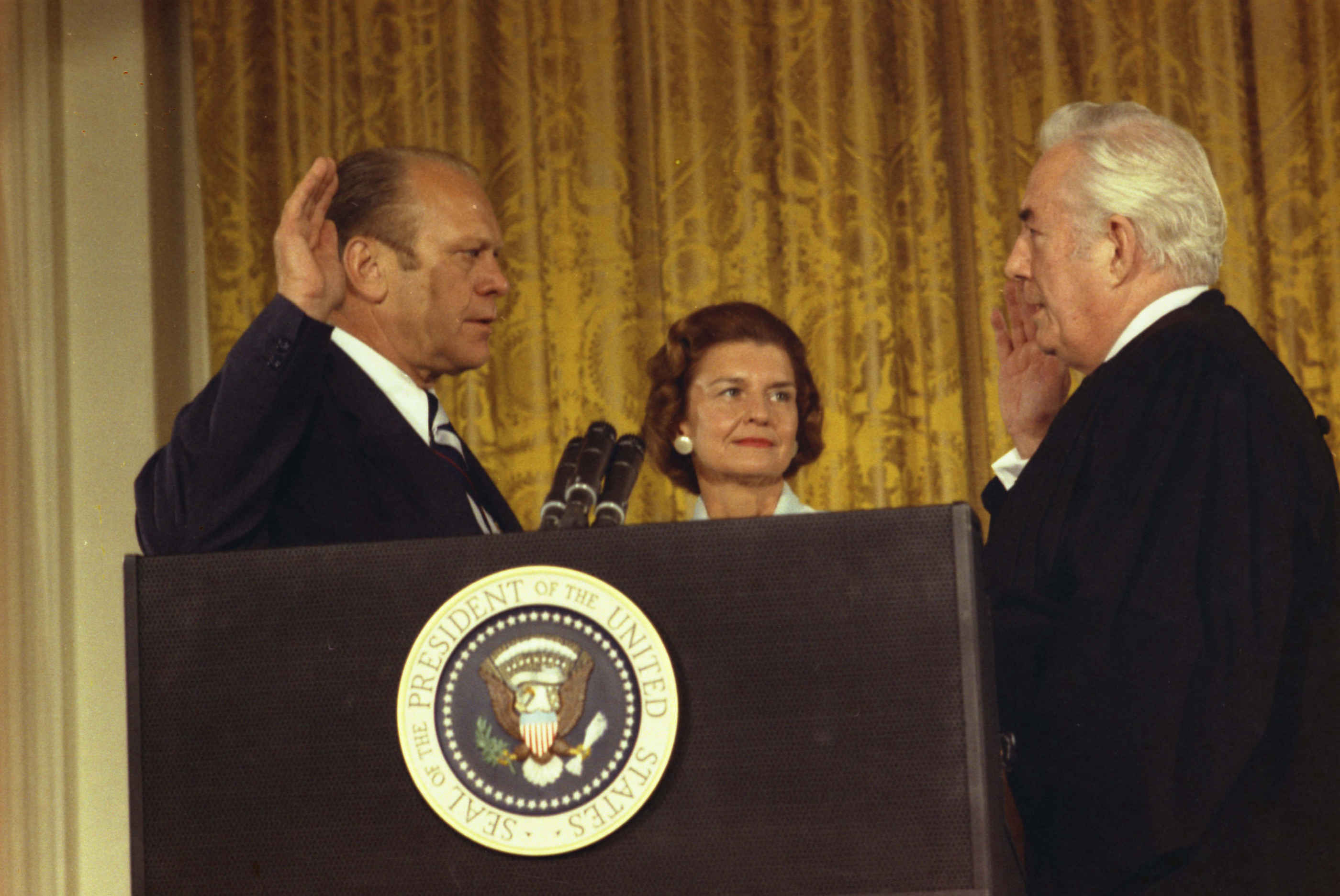
Gerald R. Ford takes the presidential oath from Chief Justice Warren Burger in the East Room of the White House, August 9, 1974. White House Photographic Office / Gerald R. Ford Presidential Library and Museum, A0004-10; National Archives 6923692. Image source · Public domain.
WASHINGTON, Aug. 9.—Richard Nixon has resigned the Presidency, and Gerald Ford has taken the oath as his successor. Mr. Nixon announced his decision in a televised address last night as the Watergate evidence and the loss of congressional support made his continued tenure untenable.
The release this week of a recorded conversation from June 1972 further damaged the President's defence. Impeachment proceedings had already advanced in the House Judiciary Committee. Resignation has brought the immediate struggle over removal to an end, but the legal and public questions surrounding the affair remain.
Mr. Ford enters the office without having been elected either President or Vice-President. He was appointed to the vice-presidency after Spiro Agnew's resignation last year. The constitutional process has supplied a successor under circumstances few voters expected when they cast their ballots in 1972.
The new President's first task is to establish confidence in an office badly injured by the conduct disclosed during Watergate. That work begins amid relief, anger and fatigue. The transfer has been orderly; the repair of trust will be less easily scheduled.
Sources & further reading
- The Watergate Files: Trials and Tribulations— Gerald R. Ford Presidential Library& Museum; undated institutional history; August 5–9, 1974 events.
- Swearing In of Gerald R. Ford— Joint Congressional Committee on Inaugural Ceremonies; August 9, 1974.