

The Aeon Herald / HISTORICAL EDITION
Viking Lands on Mars and Sends Surface Pictures
An American robot begins a search for evidence about the Martian environment, including the possibility of life.
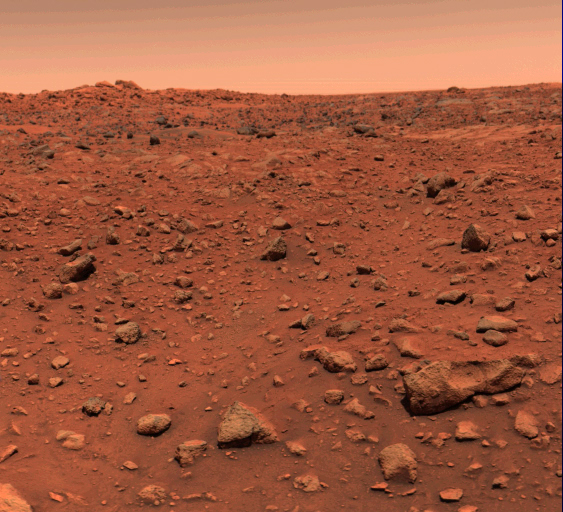
PASADENA, Calif., July 21.—Viking 1 landed on Mars yesterday and began returning photographs from the surface. The first pictures show stones, soil and the spacecraft's immediate surroundings, replacing another set of guesses with a view from the ground itself.
The lander separated from its orbiter and completed its descent automatically. Radio signals take too long to cross the distance from Earth for an operator to steer the final manoeuvres in real time. Engineers had to entrust the sequence to equipment and instructions prepared in advance.
Viking carries cameras, weather instruments and experiments designed to investigate the soil, including tests bearing on the possibility of biological activity. No photograph of a barren-looking patch can settle that question. The experiments will require careful interpretation, and unusual chemistry must not be mistaken too quickly for life.
The landing gives scientists a station from which to observe Mars over time rather than during a brief fly-by. For now, the machine is upright, the radio link is working and the surface has become a place of continuing measurement.
Sources & further reading
- 45 years ago: Viking 1 Touches Down on Mars — John Uri / NASA Johnson Space Center, 2021-07-20.
- PIA00563: first color image from Viking Lander 1 — NASA / JPL, 1976-07-21.
Related Herald reporting
- Mariner Sends First Close Views of Mars — Donald Price, 1965-07-16.
- Pathfinder Launches With a Small Rover Bound for Mars — Kevin Wallace, 1996-12-05.
- Perseverance Lands in Jezero Crater — Sarah Nguyen, 2021-02-19.