

The Aeon Herald / HISTORICAL EDITION
Eaton Fire Recovery Reaches From Burned Lots to Classrooms
The Eaton fire’s death toll has reached nineteen. Altadena’s recovery includes hazardous-material removal, the work of rebuilding and a school community disrupted far beyond the fire perimeter.
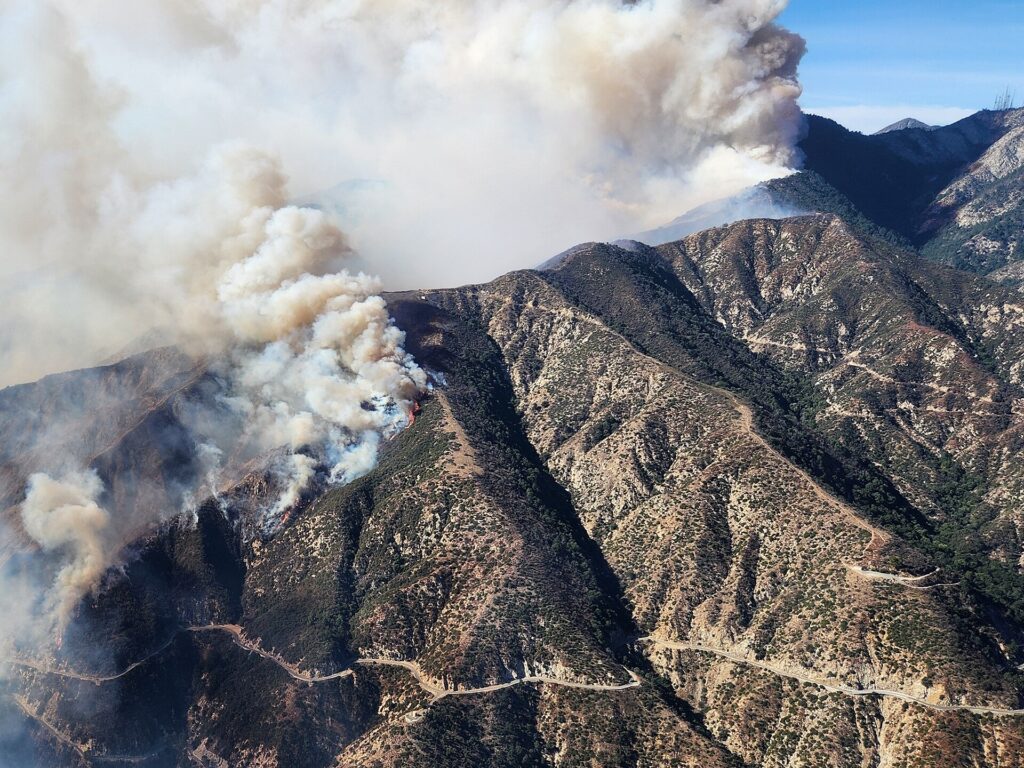
ALTADENA — The county medical examiner's latest accounting places the Eaton fire's death toll at nineteen. The July 22 update, following the discovery of additional remains, underscores how long the work of establishing the losses has continued. The fire was contained in January. Its consequences are still being measured in homes, public services and the daily arrangements of a displaced community.
Eaton began on the evening of January 7 near Altadena Drive and Midwick Drive. The incident burned 14,021 acres and destroyed more than 9,000 structures before full containment January 31. In a developed foothill community, those figures describe far more than vegetation burned within a mountain perimeter. They describe the loss of buildings through which ordinary neighborhood life was organized.
The recovery has required a sequence of operations that can sound deceptively similar in public announcements. Household hazardous material must be identified and removed; larger debris must be cleared; rebuilding requires its own work. Completion of the first assignment does not mean that a property has become a finished, habitable home. Keeping the stages distinct is necessary to understand both the progress and the time still required.
One of the early arrangements made that sequence unusually visible in Altadena. The Environmental Protection Agency and the county signed a lease effective February 8 for a staging area at the Altadena Golf Course. It was the agency's third staging area for material collected in the Eaton footprint. The purpose was temporary consolidation and repackaging before transportation to disposal facilities, rather than permanent disposal at the golf course.
The agency described protective measures including fenced boundaries, lined processing areas and perimeter air monitoring. Dust control and frequent removal of packaged waste were also part of the operation. These details matter because moving hazardous material from ruined properties creates a second responsibility: handling it without transferring the problem to another part of the community. The staging operation was a controlled step in removal, not an ordinary rubbish pile.
In February, EPA announced that its first-phase household hazardous-material assignment was complete across the Eaton and Palisades fire areas. More than a thousand lithium-ion batteries were among the materials handled across both incidents. That combined figure should not be assigned to Eaton alone. It does, however, identify one of the complications of clearing modern homes, vehicles and household equipment after a large urban fire.
The damage also interrupted institutions serving people whose own houses had survived. Pasadena Unified schools closed for almost three weeks in January. The district's Student Think Tank describes members who lost homes and others who were displaced. Its students continued meeting virtually, using an arrangement familiar from the pandemic to maintain contact during another disruption of ordinary school life.
The group's continued work offers a small but concrete view of recovery beyond the building count. Students met to grieve and plan, and continued their activities through the school year. The achievement is not a substitute for restored homes or classrooms. It is evidence that an institution can continue some of its work while the places and routines that normally support it remain unsettled.
A household displaced from Altadena is therefore connected to more than the condition of one parcel. School attendance, public operations and the ability to move through a recovering neighborhood shape the practical meaning of return. Each can proceed at a different speed. A cleared lot and a resumed class represent real progress, but neither can stand for the completion of every other part of the recovery.
Eaton's final perimeter is fixed on the map. The community affected by it is harder to draw, extending to students, workers and households whose routines crossed the burned area. The nineteen deaths remain the gravest part of the record. The task now is to rebuild the connections that let the living carry on ordinary lives, while recognizing that containment was the end of the fire's advance, not the end of its reach.
Sources & further reading
- Eaton Fire incident record — CAL FIRE.
- Wildfires Update: 31st Death Related to the January Wildfires Confirmed — County of Los Angeles Department of Medical Examiner, 2025-07-22.
- EPA and LA County Identify Third Staging Area in Altadena — U.S. Environmental Protection Agency, 2025-02-10.
- EPA Completes Household Hazardous Materials Cleanup in Response to Los Angeles Wildfires — U.S. Environmental Protection Agency, 2025-02.
- Student Think Tank History, Year Five: 2024–2025 — Pasadena Unified School District.
Related Herald reporting
- Palisades Fire Leaves a Neighborhood and Its Public Landscape to Rebuild — Jennifer Dalton, 2025-08-03.
- Eaton Fire Containment Leaves Altadena Facing a Long Recovery — Jennifer Dalton, 2025-02-01.
- Park Fire Leaves a 429,603-Acre Scar as Emergency Managers Count the Disruption — Jennifer Dalton, 2024-09-25.
- Post Fire Leaves Hungry Valley Closed for a Different Kind of Recovery — Jennifer Dalton, 2024-07-04.
- Mosquito Fire Leaves Waterworks and Burned Homes in the Repair Account — Jennifer Dalton, 2022-10-24.
- McKinney Crews Turn to Repair After Fire Devastates Klamath River — Jennifer Dalton, 2022-08-30.
- Dixie Fire Burns Through Greenville as Smoke Spreads Across the West — Jennifer Dalton, 2021-08-08.
- Palisades Fire Contained Without the Loss of a Home — Jennifer Dalton, 2021-05-27.
- Bobcat Fire Burns a Route Across the San Gabriels — Jennifer Dalton, 2020-12-27.
- Woolsey Fire Leaves Homes and a Piece of the Movies to Rebuild — Jennifer Dalton, 2019-01-13.
- Camp Fire Search Revises the Toll as Paradise Faces Its Ruins — Jennifer Dalton, 2018-12-05.
- Thomas Fire Ends With a Second Disaster in Its Watershed — Jennifer Dalton, 2018-01-21.
- Station Fire Leaves the Angeles Forest With a Long Recovery — Jennifer Dalton, 2009-10-25.
- Station Fire’s Smoke Spreads Beyond the Flames in Satellite View — Andre Lawson, 2009-09-02.
- Catalina’s Fire Scar Leaves a Long Recovery Beyond Avalon — Jennifer Dalton, 2007-11-12.
- Witch Fire Carries a Backcountry Emergency Into Rancho Bernardo — Jennifer Dalton, 2007-11-11.
- Old Fire Leaves a Burned Route From Valley to Mountain — Jennifer Dalton, 2003-11-23.
- Cedar Fire Crosses the Distance Between Forest and City — Jennifer Dalton, 2003-11-16.