The Aeon Herald / HISTORICAL EDITION
Seven Dyson Sphere Candidates Face a Test of What Lies Behind Them
An infrared survey identifies unusual stars for follow-up, while a new analysis argues that background galaxies may account for the apparent excess.
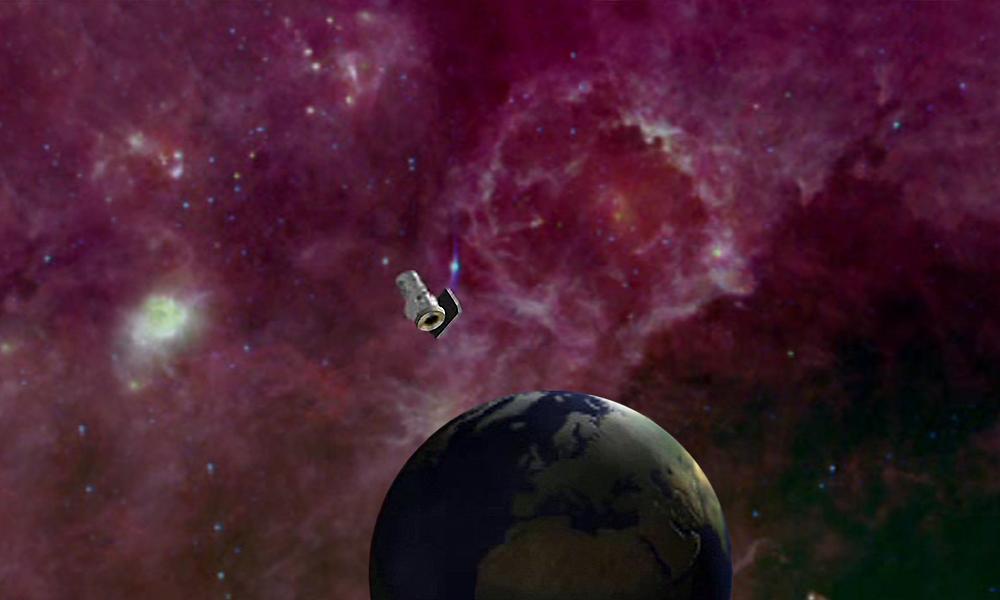
Seven stars selected in a search for possible Dyson spheres are already facing a more ordinary explanation for their unusual infrared measurements. A new research note argues that distant, dust-obscured galaxies along the same lines of sight may be contributing light attributed to the stars.
The candidates come from Project Hephaistos, whose researchers examined optical and infrared measurements from Gaia, 2MASS and WISE. Their filtering process reduced a sample of five million objects to seven M-dwarf stars whose infrared excesses warranted closer study. The paper presents them as candidates for further analysis, not confirmed artificial structures.
The search tests a physical possibility associated with advanced technology. Structures collecting a substantial share of a star’s energy would have to dispose of heat, potentially producing an unusual infrared signature. That makes excess infrared emission a place to look, while leaving the task of distinguishing it from dust and other astronomical sources.
In a preprint released May 23, Tongtian Ren, Michael A. Garrett and Andrew P. V. Siemion report radio-source associations near three candidates, labeled A, B and G. They propose that obscured background galaxies contribute significantly to the WISE measurements. They further argue that the expected number of such alignments could account for all seven candidates.
That final point is a statistical argument, not a resolved identification of a background galaxy behind every star. Equally, surviving the original selection filters does not establish that a star is enclosed by machinery. Both claims depend on whether measurements from different surveys are being attributed to the same physical object.
The follow-up problem is now sharply defined: separate the foreground stars from nearby sources on the sky and determine where the infrared light originates. The candidate list supplies targets for that work. A technological interpretation would require evidence that remains after dust and foreground or background contamination have been tested.
Sources & further reading
- Project Hephaistos — II. Dyson Sphere Candidates from Gaia DR3, 2MASS, and WISE — Matías Suazo, Erik Zackrisson, Priyatam K. Mahto and colleagues / Monthly Notices of the Royal Astronomical Society; Preprint May 5, 2024.
- Background Contamination of the Project Hephaistos Dyson Spheres Candidates — Tongtian Ren, Michael A. Garrett and Andrew P. V. Siemion / research preprint; May 23, 2024.
Related Herald reporting
- An Erratically Dimming Star Draws a Search for Natural—and Artificial—Causes — Eric Bennett, 2015-10-20.
- Another Dimming Star Comes With a Disk—and a Different Puzzle — Eric Bennett, 2016-08-27.
- The Proxima Signal Leads Investigators Back to Earth — Sarah Nguyen, 2021-10-26.
- ʻOumuamua’s Small Extra Acceleration Favors a Cometary Explanation — Sarah Nguyen, 2018-06-28.
- A Claim of Signals in 234 Stars Faces an Independent Test — Eric Bennett, 2016-10-12.
- A More Sensitive Search Leaves the Wow! Signal Unanswered — Adrian Mercer, 2001-01-12.