

The Aeon Herald / HISTORICAL EDITION
American Indian Movement Begins With the Needs of Native City Residents
A Minneapolis organization brings policing, housing and employment into a growing demand for Native self-determination.
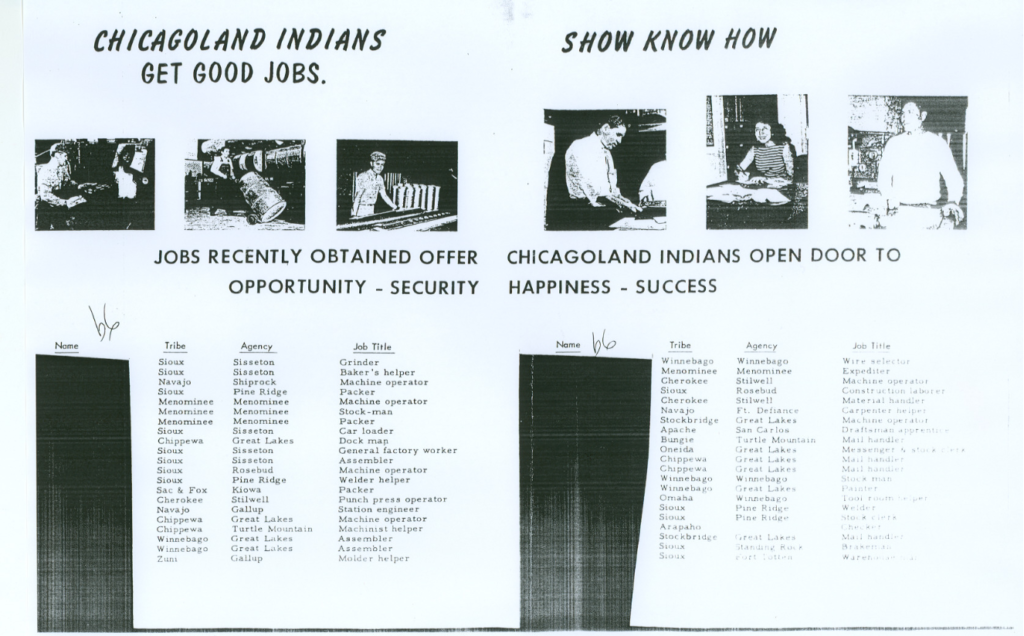
A Chicago Bureau of Indian Affairs relocation poster from the 1952–1960 field-office files advertises jobs for Native workers. Earlier federal publicity supplies context for urban organizing; Minneapolis and Los Angeles are not pictured. Credit: Bureau of Indian Affairs, Chicago Field Office / National Archives, Record Group 75. Original source. Public domain: official U.S. government promotional document; National Archives classroom facsimile. Public domain.
MINNEAPOLIS, Dec. 22.—An organization formed here this summer is directing attention to the treatment of Native people in the city. The American Indian Movement has emerged around concerns including police conduct, housing, education and employment, making urban experience a central part of its political work.
Dennis Banks, Clyde Bellecourt and George Mitchell are among its founders. The organization’s beginnings belong to the life of a Native population whose needs have too often been divided between offices dealing with Indian affairs and agencies serving the city at large.
Federal relocation has encouraged Indian people to seek jobs in metropolitan areas. Arrival has not guaranteed decent housing, steady employment or fair treatment. A city can offer more employers while leaving newcomers isolated from reliable assistance and from the support available through home communities.
The movement’s focus on policing is therefore connected with other public questions. How a complaint is heard, how an arrest is handled and whether a person can obtain representation are parts of the terms on which Native residents live in the city.
Los Angeles has its own growing Native community and its own networks of relatives and organizations. Minneapolis should be followed closely without assuming that one city’s organization speaks for every Native resident elsewhere. Local circumstances and disagreements remain part of the story.
The new movement’s national direction is still being made. For now, its formation makes an immediate point: Indian affairs do not stop at a reservation boundary, and public responsibilities cannot be made to disappear when a Native family takes a city address.
Explore the Story
Sources & further reading.
Related Herald reporting
- Indian Civil Rights Act Sets Individual Protections Within Tribal Government — Thomas Navarro, 1968-04-12.
- Native Delegates Bring Treaties and Sovereignty to the Poor People’s Campaign — Thomas Navarro, 1968-06-20.
- Native Students Press UCLA to Make Their History Part of the University — Thomas Navarro, 1969-12-07.
- Alcatraz Occupation Ends; the Questions It Raised Remain on the Mainland — Thomas Navarro, 1971-06-12.
- Trail of Broken Treaties Brings Twenty Demands Into Washington — Katherine “Kate” Romero, 1972-11-10.
- Wounded Knee Occupation Ends After Seventy-One Days — Katherine “Kate” Romero, 1973-05-09.
- Fishing Families Put Treaty Promises on the Riverbank — Thomas Navarro, 1964-03-08.
- Court Affirms Treaty Tribes’ Share of Washington Fisheries — Katherine “Kate” Romero, 1974-02-13.
- A Younger Generation Organizes to Speak for Itself — Thomas Navarro, 1961-09-03.
- Longest Walk Reaches Washington With Treaty Rights at Its Center — Katherine “Kate” Romero, 1978-07-23.
- Tribal Delegates Form a National Congress to Defend Their Rights — Edward Hensley, 1944-11-19.
- California Indian Legal Services Builds a Practice Around Tribal Rights — Thomas Navarro, 1967-12-17.
Join the conversation