

The Aeon Herald / HISTORICAL EDITION
The Federal Relocation Promise Meets the Cost of Living in Los Angeles
Vocational assistance and urban relocation offer opportunity while leaving Native newcomers to build housing, work and community connections.
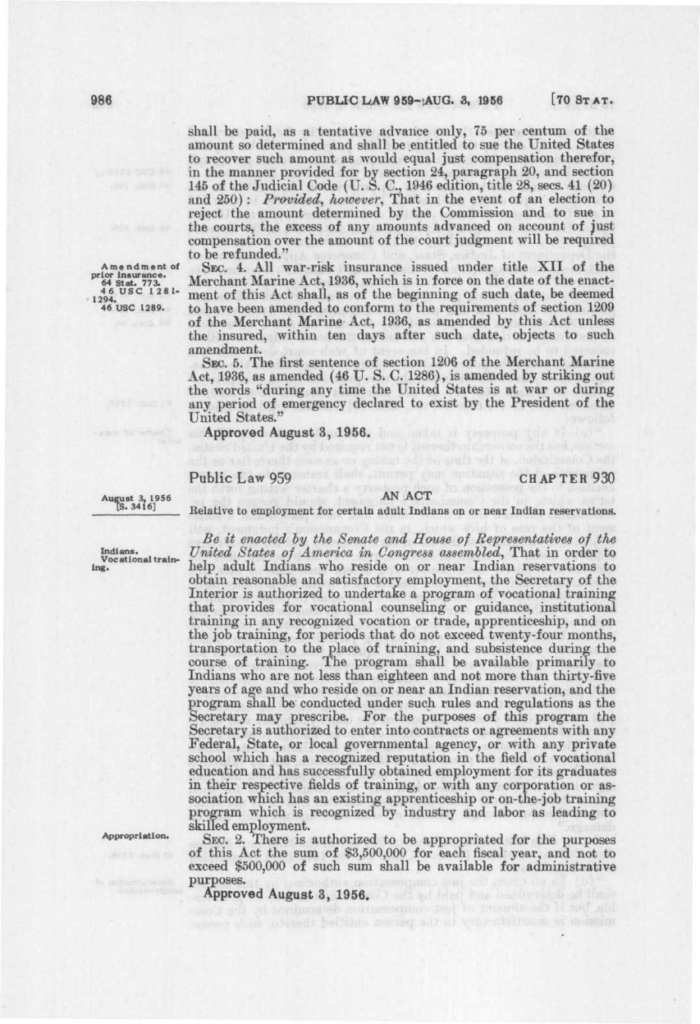
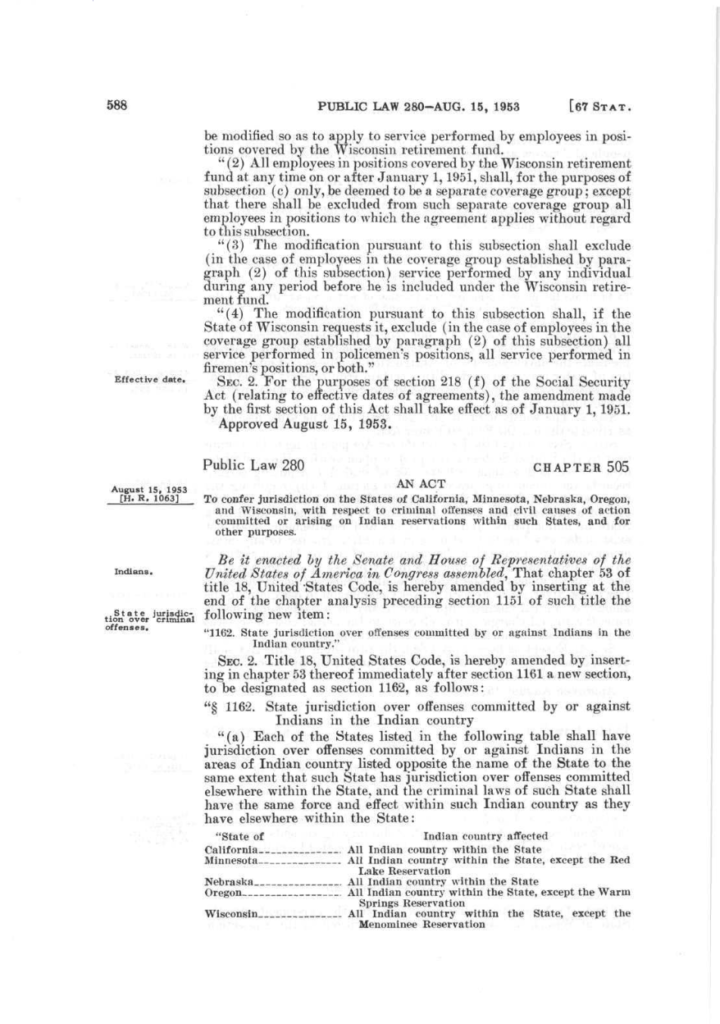
Facsimile from the Public Law 84-959 on vocational training, August 3, 1956, reproduced from the U.S. Statutes at Large. The original statutory page is shown without alteration. Credit: U.S. Congress / Government Publishing Office, GovInfo. Original source. Public domain: official U.S. federal government publication and statutory text. Public domain.
LOS ANGELES, Aug. 12.—Federal assistance for vocational training has received new statutory support, adding to the government’s effort to move Indian workers toward employment away from reservations. Los Angeles is already one of the cities receiving Native newcomers through the Bureau of Indian Affairs relocation program.
The bureau opened relocation offices early in the decade and has offered help locating employment and housing. The August 3 law authorizes vocational training for adult Indians living on or near reservations. Training assistance and the broader relocation effort are related measures, but they are not identical programs.
A promised job is only one part of a move. Rent, transportation and the interval before a first wage can determine whether a family has a secure beginning. Discrimination can narrow the housing and work actually available, regardless of the opportunities advertised in a brochure.
The city also changes how people find one another. Relatives, acquaintances, gatherings and community organizations can supply information that a placement office cannot: where a room can be found, who needs a worker, or how to make contact with someone from home.
A person moving to Los Angeles does not thereby cease to belong to a Native nation. Returning home, maintaining family obligations and making a life in the city may all be parts of the same experience. Describing relocation as a completed act of assimilation misses those continuing connections.
The test of federal promises will be found after arrival. The Herald will follow the work, housing and community life that newcomers establish, and the distance between the bureau’s assurances and the assistance a family can actually obtain.
Explore the Story
Sources & further reading.
Related Herald reporting
- Agua Caliente’s Women Leaders Press for Control of Their Land’s Future — William Keane, 1959-12-13.
- California Rancheria Law Sets Conditions for Ending Federal Trust Relations — Joan Mercer, 1958-08-19.
- A Younger Generation Organizes to Speak for Itself — Thomas Navarro, 1961-09-03.
- Native Students Press UCLA to Make Their History Part of the University — Thomas Navarro, 1969-12-07.
- Indian Education Act Opens a Greater Place for Parents and Community Priorities — Katherine “Kate” Romero, 1972-06-25.
- Indian Child Welfare Act Sets Standards Against the Breakup of Native Families — Katherine “Kate” Romero, 1978-11-09.
- At Sherman Institute, Schooling Reaches Into the Life of the Family — Beatrice Lyle, 1933-11-19.
- New Law Extends California’s Court Jurisdiction Into Indian Country — William Keane, 1953-08-16.
Join the conversation