

The Aeon Herald / HISTORICAL EDITION
Congress Announces a Policy of Ending Federal Supervision of Indian Tribes
House Concurrent Resolution 108 presents termination as equal citizenship, while placing tribal relationships and trust protections in question.
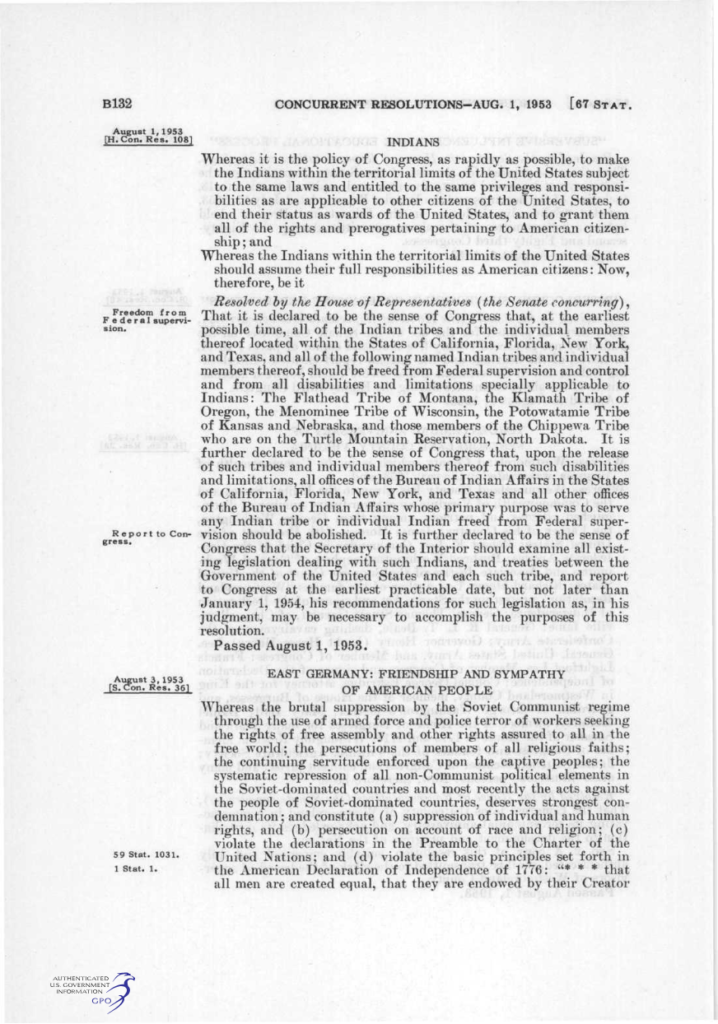
Facsimile from the House Concurrent Resolution 108, August 1, 1953, reproduced from the U.S. Statutes at Large. The original statutory page is shown without alteration. Credit: U.S. Congress / Government Publishing Office, GovInfo. Original source. Public domain: official U.S. federal government publication and statutory text. Public domain.
WASHINGTON, Aug. 2.—Congress yesterday adopted a resolution declaring a policy of ending federal supervision over Indian tribes and their members as rapidly as possible. The proposal presents the change as a movement toward the same legal position as other citizens. For tribal communities, it raises immediate questions about land, services and the obligations of the United States.
House Concurrent Resolution 108 identifies groups and areas for particular attention and calls for recommendations for legislation. It does not, by itself, dissolve every tribe or remove every trust restriction. The separate laws proposed to carry out the policy will determine its consequences in individual cases.
The language of equal treatment cannot settle whether the government may simply withdraw from responsibilities established through treaties and federal law. Indian people already possess American citizenship. Their tribal relationships involve governments and property arrangements in addition to individual status.
Trust land is one central concern. The removal of protections can change exposure to taxation, sale and outside pressure. A family may be described as newly free while finding its home subject to obligations for which neither income nor adequate preparation has been provided.
California is expressly included in the resolution’s policy. That makes the proposal a local matter for readers in Southern California as well as a congressional development. Communities differ in their resources, land holdings and wishes; none should be treated as an interchangeable case.
The proper questions now concern consent, the terms of proposed legislation and the fate of continuing federal duties. A declaration from Washington is no evidence that affected communities have agreed that their political relationship should end.
Explore the Story
Sources & further reading.
Related Herald reporting
- Indian Voters Win Court Rulings in Arizona and New Mexico — Samuel Voss, 1948-08-08.
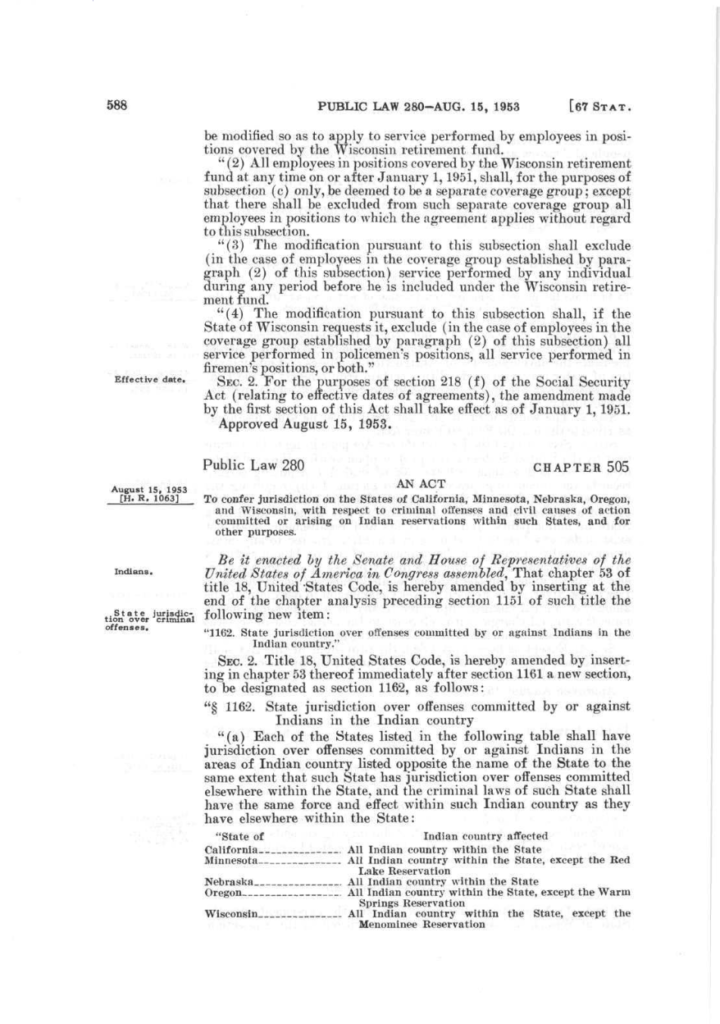
- New Law Extends California’s Court Jurisdiction Into Indian Country — William Keane, 1953-08-16.
- Agua Caliente’s Women Leaders Press for Control of Their Land’s Future — William Keane, 1959-12-13.
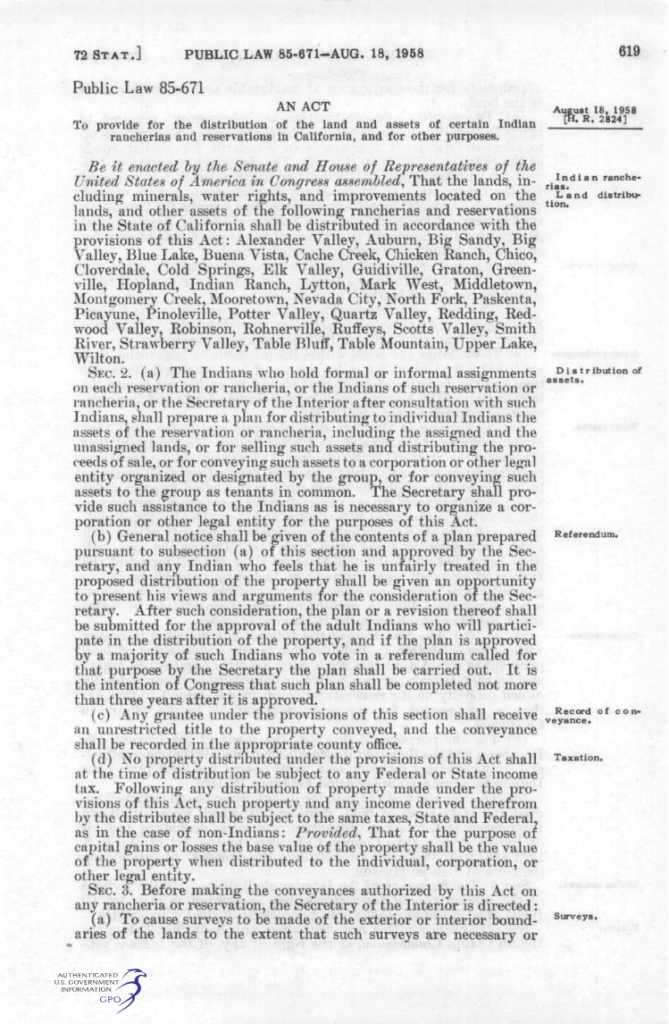
- California Rancheria Law Sets Conditions for Ending Federal Trust Relations — Joan Mercer, 1958-08-19.
- Section 14 Places Palm Springs’ Growth Beside the Cost of Displacement — Thomas Navarro, 1966-12-18.
- California Indian Legal Services Builds a Practice Around Tribal Rights — Thomas Navarro, 1967-12-17.
- Indian Civil Rights Act Sets Individual Protections Within Tribal Government — Thomas Navarro, 1968-04-12.
- Blue Lake Return Gives Land to a Policy of Self-Determination — Thomas Navarro, 1970-12-16.
- New Indian Law Halts Allotment and Opens a Different Course for Tribal Government — Samuel Voss, 1934-06-19.
- Rincon Appeal Ends on a Jurisdiction Question, Leaving County Authority Unsettled — Katherine “Kate” Romero, 1974-06-16.
- New Law Offers Tribes a Greater Role in Running Federal Programs — Katherine “Kate” Romero, 1975-01-05.
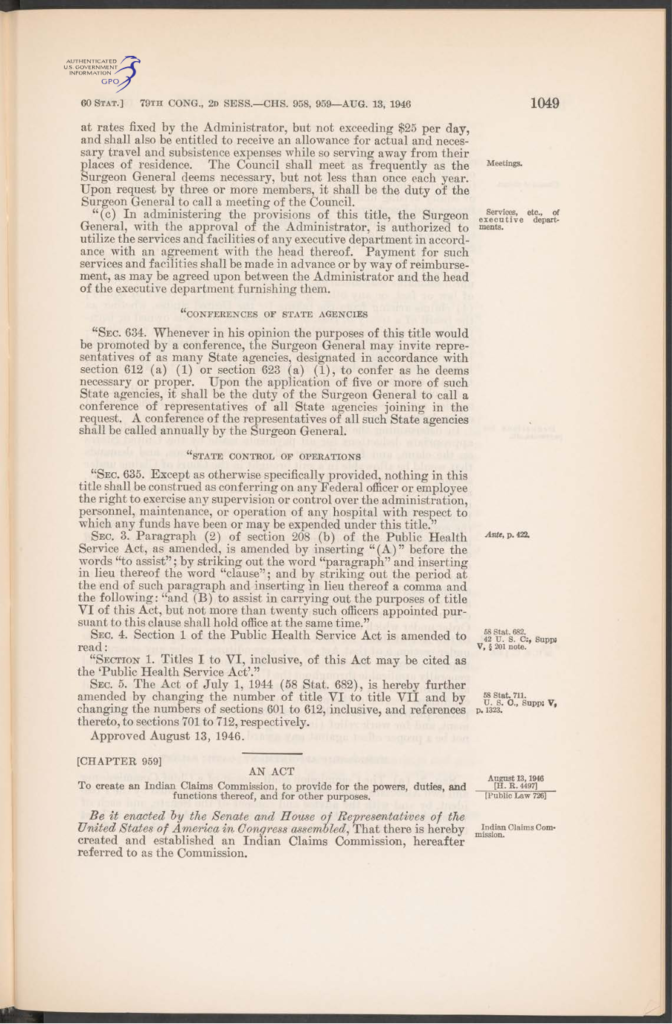
- Indian Claims Commission Opens a Federal Hearing for Old Wrongs — Samuel Voss, 1946-08-14.
Join the conversation