

The Aeon Herald / HISTORICAL EDITION
Trail of Broken Treaties Brings Twenty Demands Into Washington
The occupation of BIA headquarters draws attention, but the caravan’s written demands concern land, treaties and the federal relationship.
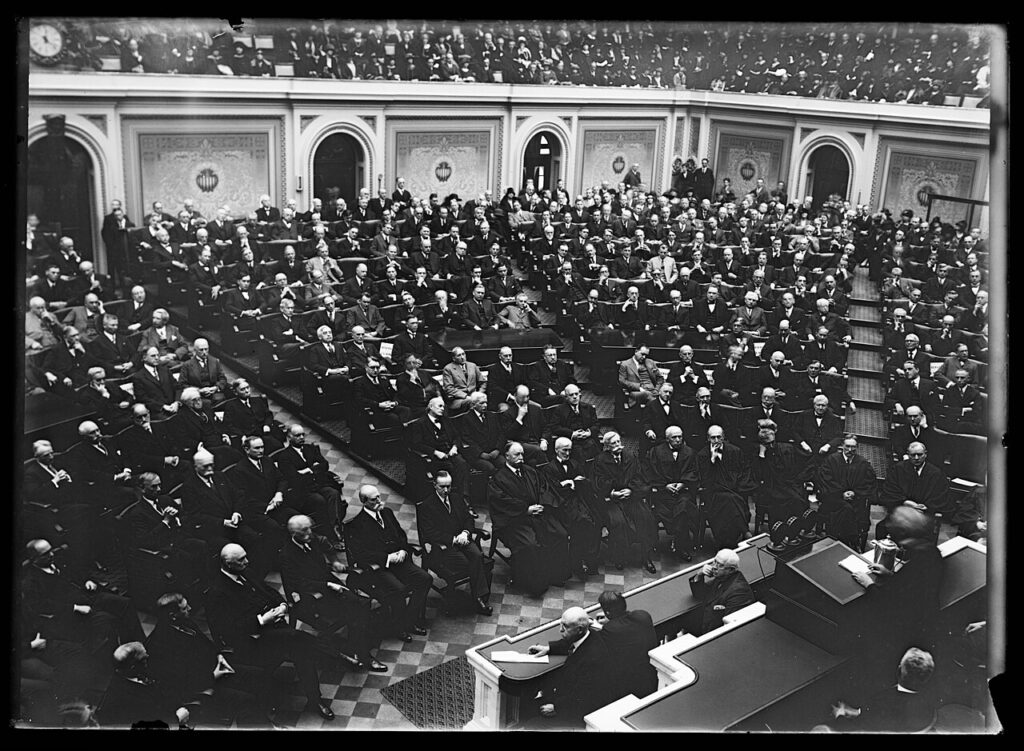
The U.S. Capitol in 1923. Earlier institutional context for the federal decisions and treaty obligations discussed in this report; the reported meeting or demonstration is not pictured. Credit: Harris & Ewing Collection / Library of Congress. Original source. Public domain: Harris & Ewing collection; Library of Congress reports no known restrictions.
WASHINGTON, Nov. 10.—The Trail of Broken Treaties has brought Native grievances across the country and into the Bureau of Indian Affairs headquarters. The occupation of the building has ended after a week of confrontation. Its Twenty-Point Position Paper remains the clearest account of what the participants came to demand.
Caravans left Seattle, San Francisco and Los Angeles in October, gathering people and hearing complaints as they moved east. The demonstration was timed to reach Washington during the presidential election. The journey placed the circumstances of different Native communities within a shared political undertaking.
The position paper calls for recognition and enforcement of treaties, restoration of terminated tribes and a changed relationship with federal authority. It also addresses land, health, housing and education. The demands do not reduce to a request for another office to administer the same arrangements.
In Washington, plans for meetings and accommodation gave way to conflict. The occupation and the damage associated with it have become the dominant public account. Those matters require examination, but a report confined to broken furniture would leave the government’s obligations almost entirely unexamined.
I came to this assignment with notebooks begun during periods at Alcatraz. There, keeping a political claim before the public also meant keeping track of food, water, letters and who could remain another week. That experience is part of my perspective here; it does not make the choices of every participant identical.
The work after the caravan is to put the Twenty Points beside the replies of the offices addressed. Readers should be able to judge the specific proposals and the government’s response. The argument has reached Washington. Whether it receives a substantive hearing remains the question.
Explore the Story
Sources & further reading.
Related Herald reporting
- San Diego Tribal Chairmen Establish a Common Working Association — Katherine “Kate” Romero, 1972-12-10.
- Indian Education Act Opens a Greater Place for Parents and Community Priorities — Katherine “Kate” Romero, 1972-06-25.
- Wounded Knee Occupation Ends After Seventy-One Days — Katherine “Kate” Romero, 1973-05-09.
- Court Affirms Treaty Tribes’ Share of Washington Fisheries — Katherine “Kate” Romero, 1974-02-13.
- Alcatraz Occupation Ends; the Questions It Raised Remain on the Mainland — Thomas Navarro, 1971-06-12.
- American Indian Movement Begins With the Needs of Native City Residents — Thomas Navarro, 1968-12-22.
- Native Delegates Bring Treaties and Sovereignty to the Poor People’s Campaign — Thomas Navarro, 1968-06-20.
- Longest Walk Reaches Washington With Treaty Rights at Its Center — Katherine “Kate” Romero, 1978-07-23.
- Fishing Families Put Treaty Promises on the Riverbank — Thomas Navarro, 1964-03-08.
- A Younger Generation Organizes to Speak for Itself — Thomas Navarro, 1961-09-03.
- Tribal Delegates Form a National Congress to Defend Their Rights — Edward Hensley, 1944-11-19.
- Indian Health Council Begins With Local Work and a Claim to Better Care — Thomas Navarro, 1970-12-20.
Join the conversation