

The Aeon Herald / HISTORICAL EDITION
San Diego Tribal Chairmen Establish a Common Working Association
A regional association gives neighboring tribal governments a way to pursue shared concerns while retaining their separate authority.
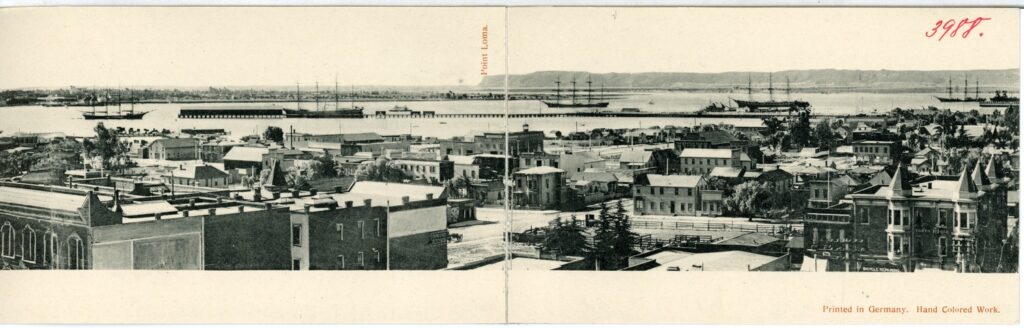
San Diego and its bay in a 1903 postcard. Earlier regional context for the association’s work; the founding meeting and reservation communities are not pictured. Credit: Brück & Sohn Kunstverlag, via Wikimedia Commons. Original source. CC0 1.0 dedication by the contributing publisher; historic 1903 postcard. CC0.
SAN DIEGO COUNTY, Dec. 10.—Tribal leaders in the region have established the San Diego Tribal Chairmen’s Association, creating a means of working together on concerns that cross reservation boundaries. Its beginnings this year place cooperation among Native governments on a continuing organizational footing.
The association’s value will lie in practical work: identifying common needs, communicating with public agencies and developing the resources required to pursue an issue beyond a single meeting. Each participating government retains its own identity and responsibilities.
That distinction is particularly important in Southern California. Neighboring reservations do not constitute one government, and the Native peoples of the region do not share a single undifferentiated history. Cooperation is a political decision made by governments that have reasons to work together.
Public discussions of Indian affairs often turn toward Washington. Many of the decisions affecting daily life also arrive through county offices, schools and service agencies. A regional organization can help keep those institutions accountable for a pattern that an isolated complaint may not reveal.
It can also provide continuity. A problem involving transportation, health or employment may require repeated attention long after the first public announcement. Shared staff work and regular contact can preserve the knowledge that would otherwise have to be assembled again each time.
The new association should be followed through the decisions of its members and the services it is able to secure. A common organization is a tool, not a replacement for the people and governments using it. Its story will be written in that continuing relationship.
Explore the Story
Sources & further reading.
Related Herald reporting
- Indian Health Council Begins With Local Work and a Claim to Better Care — Thomas Navarro, 1970-12-20.
- Trail of Broken Treaties Brings Twenty Demands Into Washington — Katherine “Kate” Romero, 1972-11-10.
- Indian Education Act Opens a Greater Place for Parents and Community Priorities — Katherine “Kate” Romero, 1972-06-25.
- Blue Lake Return Gives Land to a Policy of Self-Determination — Thomas Navarro, 1970-12-16.
Join the conversation