

The Aeon Herald / HISTORICAL EDITION
On Winston Street, Native Women Build a Place to Turn
Babba Cooper and Marian Zucco establish United American Indian Involvement amid the needs of Native residents in downtown Los Angeles.
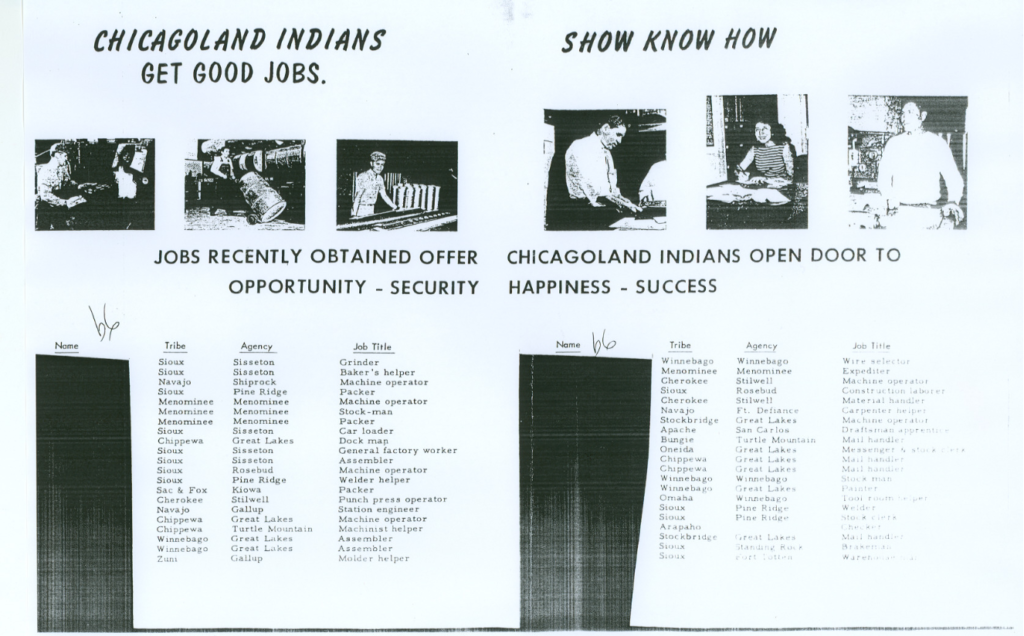
A Chicago Bureau of Indian Affairs relocation poster from the 1952–1960 field-office files advertises jobs for Native workers. Earlier federal publicity supplies context for urban organizing; Minneapolis and Los Angeles are not pictured. Credit: Bureau of Indian Affairs, Chicago Field Office / National Archives, Record Group 75. Original source. Public domain: official U.S. government promotional document; National Archives classroom facsimile. Public domain.
LOS ANGELES, Dec. 15.—A new Native community organization on Winston Street is beginning with the people who need a place to turn now. United American Indian Involvement has been established by Babba Cooper, a Lakota woman, and Marian Zucco, a Paiute woman, in the downtown neighborhood around Indian Alley.
The undertaking responds to poverty, substance abuse and the difficulty of finding reliable assistance. Its location near Skid Row places the work among people who may be poorly served by the institutions that claim responsibility for them.
Federal relocation helped bring Native workers and families into Los Angeles. The city also holds people who came by other routes, with different hopes and different ties to home. A common need for care does not make their histories interchangeable.
Cooper and Zucco are building a service around recognition of those residents as people with relationships and futures. A room in which someone can ask for help without humiliation is a modest beginning by the scale of public budgets. It can be an important beginning in the life of the person who enters it.
The work will require resources and continuity. Recovery and a stable life cannot be promised by an opening announcement. The organization must establish dependable help while dealing with the circumstances that bring people to its door.
This is also a story of Native women exercising authority in Los Angeles. Their organizing belongs in the record of the rights movement alongside the occupations and the legislation. It asks what self-determination can mean on an ordinary city street, in the care people create for one another.
Explore the Story
Sources & further reading.
Related Herald reporting
- Women of All Red Nations Connect Health, Family and Political Survival — Katherine “Kate” Romero, 1978-12-10.
- Rincon Appeal Ends on a Jurisdiction Question, Leaving County Authority Unsettled — Katherine “Kate” Romero, 1974-06-16.
- New Law Offers Tribes a Greater Role in Running Federal Programs — Katherine “Kate” Romero, 1975-01-05.
- Federal Review Finds Serious Failures in Sterilization Consent Procedures — Katherine “Kate” Romero, 1976-11-07.
- Rincon Clinic Opening Marks Years of Work Toward Native-Directed Care — Katherine “Kate” Romero, 1976-12-12.
- Indian Health Council Begins With Local Work and a Claim to Better Care — Thomas Navarro, 1970-12-20.
- San Diego’s Native Community Establishes an Urban Health Center — Katherine “Kate” Romero, 1979-12-09.
- Court Affirms Treaty Tribes’ Share of Washington Fisheries — Katherine “Kate” Romero, 1974-02-13.
Join the conversation