

The Aeon Herald / HISTORICAL EDITION
Voting Rights Act Gives Federal Force to the Fight Against Racial Exclusion
The new law addresses discriminatory voting practices nationwide while leaving practical work ahead for Native voters.
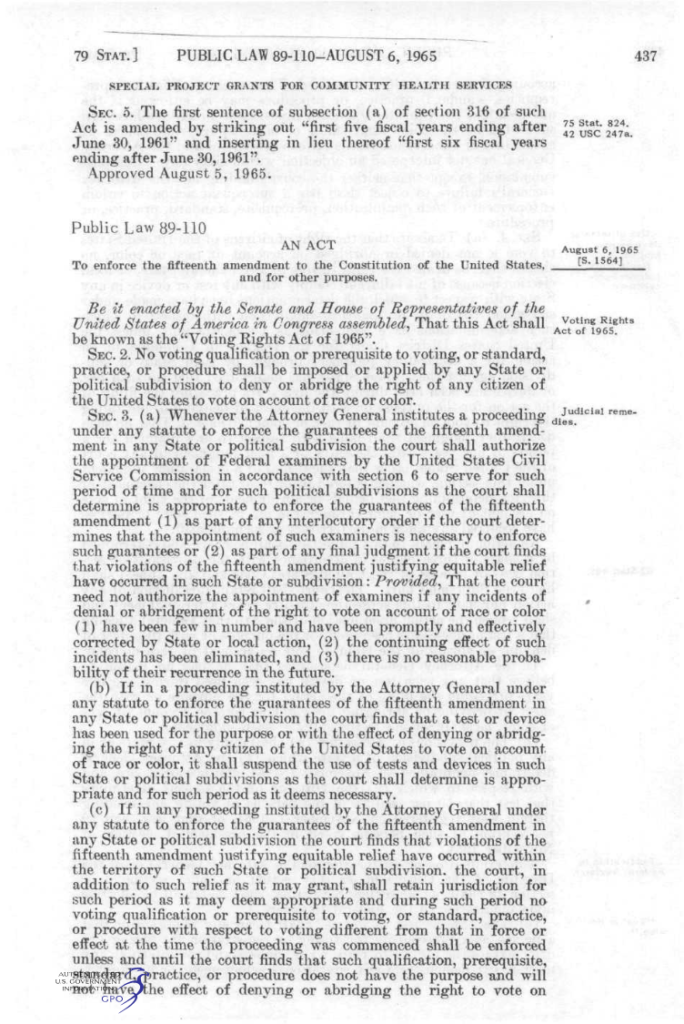
Facsimile from the Voting Rights Act, August 6, 1965, reproduced from the U.S. Statutes at Large. The original statutory page is shown without alteration. Credit: U.S. Congress / Government Publishing Office, GovInfo. Original source. Public domain: official U.S. federal government publication and statutory text. Public domain.
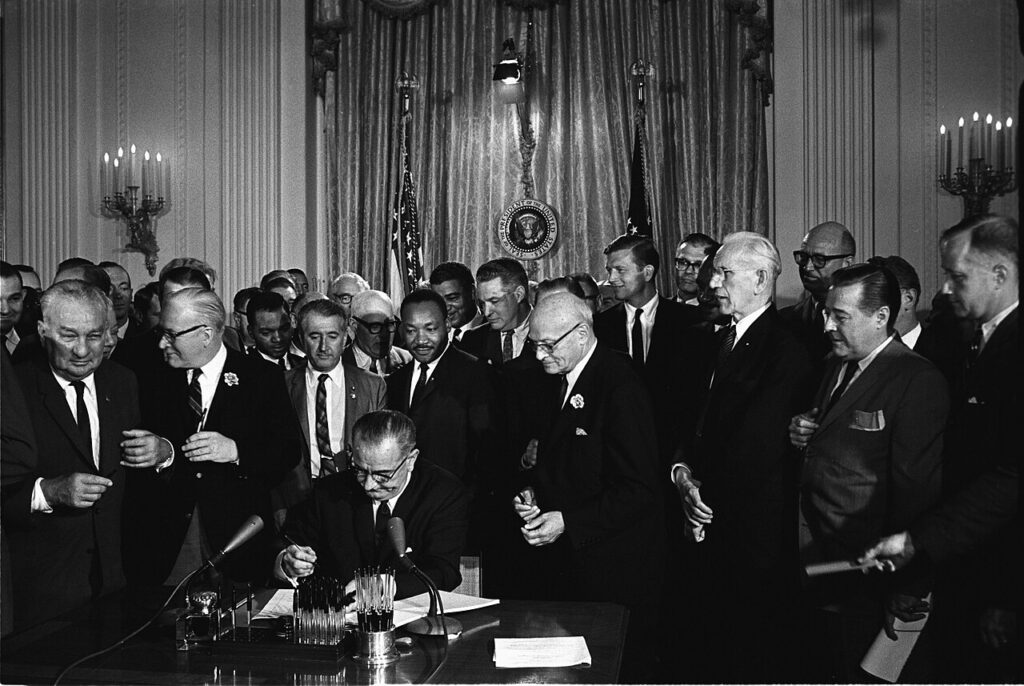
WASHINGTON, Aug. 7.—President Johnson yesterday signed the Voting Rights Act, giving the federal government stronger means to confront racial exclusion from elections. The law follows the struggle of Black citizens and civil-rights organizers whose efforts, and the violence directed against them, forced voting practices before the nation.
Its protections also matter to Native citizens. Section 2 prohibits the denial or abridgment of voting rights because of race or color. Other provisions establish special enforcement machinery for jurisdictions covered by the act’s formula, including the suspension of specified tests and federal examination of changes to voting practices.
The statute does not mean that every local obstacle has disappeared. Registration procedures, distance, intimidation and the handling of an applicant’s qualifications can determine whether a citizen reaches a ballot. The law provides tools with which such practices can be challenged; those tools must be used and enforced.
Native plaintiffs in Arizona and New Mexico won important court decisions in 1948 against exclusions tied to reservation status. Those victories established that American citizenship could not be emptied of political meaning by a broad description of Indians as wards or persons not taxed.
The new national measure belongs beside that earlier work. Voting in a state or federal election does not require a person to surrender tribal citizenship, and participation in American politics does not settle the separate obligations owed to a tribal nation.
For election officials, the immediate duty is to administer registration and voting fairly. For the press, the assignment is to follow the citizen beyond the ceremony at which the law is signed. Access is tested at the registration counter and the polling place.
Explore the Story
Sources & further reading.
Related Herald reporting
- Fishing Families Put Treaty Promises on the Riverbank — Thomas Navarro, 1964-03-08.
- California Indian Legal Services Builds a Practice Around Tribal Rights — Thomas Navarro, 1967-12-17.
- Indian Civil Rights Act Sets Individual Protections Within Tribal Government — Thomas Navarro, 1968-04-12.
- Johnson Signs Civil Rights Act After Long Congressional Fight — Thomas McKenna, 1964-07-03.
- Marchers Fill Washington With Demand for Jobs and Freedom — Richard Salazar, 1963-08-29.
- Montgomery Buses Desegregated as Boycott Ends — Thomas McKenna, 1956-12-22.
- Supreme Court Rules School Segregation Unconstitutional — Mary Ellison, 1954-05-18.
- Indian Voters Win Court Rulings in Arizona and New Mexico — Samuel Voss, 1948-08-08.
- Rosa Parks Dies at 92; Her Resistance Reached Beyond One Bus Ride — Monica Grant, 2005-10-25.
- Section 14 Places Palm Springs’ Growth Beside the Cost of Displacement — Thomas Navarro, 1966-12-18.

Join the conversation